

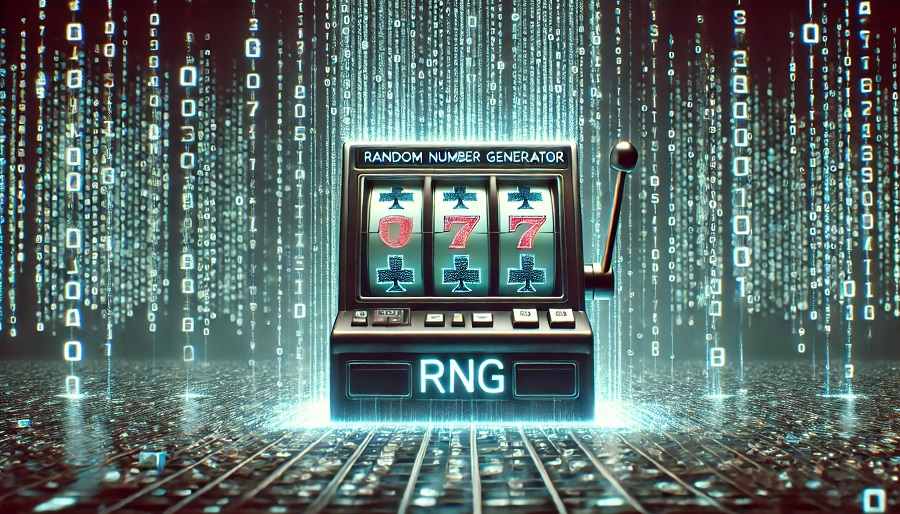
The rapid expansion of the digital gambling industry has fundamentally transformed how players interact with games of chance. Traditional land-based casinos rely on physical actions—the tangible shuffle of a deck of cards, the mechanical drop of a roulette ball, or the rolling of dice—to determine the fairness of a game. In the digital landscape, this physical reality vanishes completely. When a player clicks a button on a smartphone or computer screen to spin a digital slot machine or receive a blackjack hand, they are relying entirely on invisible computer code.
In this virtual environment, player trust becomes the ultimate currency. If consumers harbor even a slight suspicion that the underlying game software is rigged or systematically manipulated to favor the house beyond the advertised rules, a platform’s reputation will collapse immediately. To bridge this psychological trust gap, modern online casino brands utilize Random Number Generator certification. By subjecting their core algorithms to rigorous verification by independent, accredited testing laboratories, operators transform absolute invisibility into certified credibility, establishing a foundation of mathematical fairness that is essential for commercial survival.
Understanding the Core Architecture of Random Number Generation
Before exploring the verification process, it is essential to understand the technology that drives digital casino games. At the center of every digital game sits a Random Number Generator, or RNG. This software module is responsible for producing a continuous, multi-digit sequence of numbers that corresponds to unpredictable in-game outcomes, such as a combination of symbols on a slot machine payline.
Pseudorandom vs Hardware-Based Engines
Early digital gambling systems frequently relied on pseudorandom number generators. These are software-based algorithms that utilize a mathematical formula starting from a specific starting number, known as a seed value, to calculate long numeric sequences. While highly efficient, pseudorandom architectures are inherently deterministic; if someone discovers the exact mathematical formula and the active seed value, the future outcomes become entirely predictable.
To achieve enterprise-grade security and true unpredictable fairness, modern, state-licensed platforms utilize Hardware Random Number Generators, often referred to as True RNGs. These sophisticated systems harvest inputs from unpredictable physical environmental microscopic anomalies, such as thermal noise variances, radioactive decay fluctuations, or chaotic photoelectric pulses. Because these natural phenomena are completely devoid of patterns, the resulting numerical outputs are mathematically impossible to predict, reverse-engineer, or crack.
The Certification Protocol: Inside the Testing Labs
An online casino operator cannot simply claim that their software is fair; they must prove it through regular, uncompromised audits conducted by internationally recognized, third-party testing agencies. Prominent certification bodies—such as eCOGRA, iTech Labs, BMM Testlabs, and Gaming Laboratories International—follow comprehensive forensic evaluation protocols.
Source Code Analysis and Algorithmic Auditing
The first phase of official RNG certification involves a thorough evaluation of the software’s source code. Highly specialized software engineers look deep into the codebase to verify the structural integrity of the generation logic.
The lab verifies that the code does not contain hidden anomalies, unintended logic loops, or manual override parameters that could allow an operator to artificially suppress win rates during high-stakes sessions or specific hours of the day. The goal is to ensure that the code is structured cleanly and operates with absolute, unyielding independence from external inputs.
Statistical Battery Evaluation
Once the source code passes inspection, the testing agency subjects the RNG output stream to rigorous mathematical tests. Labs extract billions of consecutive sample numbers directly from the active engine and run them through complex statistical suites, such as the Diehard battery of tests and specialized National Institute of Standards and Technology assessment arrays.
These evaluations verify that the distribution of numbers satisfies the mathematical principles of:
- Absolute Statistical Uniformity: Every single possible number within the designated range must possess an identical, equal mathematical probability of being generated.
- Total Statistical Independence: The generation of a specific number must have zero structural correlation with numbers generated previously or numbers generated in the immediate future.
How RNG Certification Elevates Platform Commercial Credibility
The successful acquisition and public display of an official RNG validation seal alters the operational dynamics of an online casino brand, providing multiple distinct commercial advantages.
Shattering the Internal Psychological Bias of Loss
When a player experiences an extended losing streak on a digital platform, human psychology naturally searches for an external explanation. In the absence of verifiable transparency, the mind easily jumps to the conclusion that the software is rigged.
When a brand prominent displays its active third-party compliance certificates, it provides an objective reality check. The player understands that their negative variance is a natural component of statistical probability, rather than platform manipulation. This baseline level of trust insulates the operator from reputational fallout during periods of high player loss.
Accelerating User Onboarding Metrics
The digital consumer marketplace is highly educated and cautious regarding data security and financial transparency. When looking for a new platform, sophisticated players actively look past marketing graphics to check the bottom footer of the website for certified safety seals. A platform backed by validated certifications can onboard new users significantly faster, reducing user acquisition costs by presenting immediate, verified evidence of operational compliance and safety.
Navigating Regulatory Frameworks and License Security
In heavily regulated gaming jurisdictions worldwide, RNG certification is a non-negotiable statutory requirement. Operators cannot secure or maintain an active gaming license without ongoing verification.
- Immutable Compliance Auditing: Regulating entities, such as the UK Gambling Commission or various US state gaming control boards, mandate that certified labs continuously audit platform engines at unannounced intervals throughout the year.
- Game Return-to-Player Alignment: Testing agencies do not just check randomness; they verify that the real-world performance of the games aligns perfectly with the advertised Return-to-Player percentages stated in the user interface.
- Sanction and Fine Mitigation: Maintaining current, unblemished RNG certificates serves as a primary shield against severe administrative fines, software suspension orders, or the permanent revocation of operational business licenses.
Frequently Asked Questions
Can an online casino brand manually disable its RNG during a major progressive jackpot draw?
No. On a legally licensed and regulated platform, the casino operator does not have the administrative access or technical ability to manipulate the RNG module mid-session. The generation software runs in an isolated, secure environment, often hosted on the independent servers of the third-party game developer rather than the casino itself. Any attempt to alter the engine structure would instantly trip digital security alerts, automatically freezing the platform and launching a mandatory regulatory investigation.
What is the specific difference between an RNG certificate and a Return-to-Player audit?
An RNG certificate verifies the underlying mathematical engine, proving that every individual spin, card draw, or dice roll is completely random and independent. An RTP audit is a retrospective analysis of real-world transactional data. The testing lab reviews millions of actual wagers placed on the live platform over a specific period to calculate the exact ratio of payouts returned to players, ensuring that the empirical results closely match the theoretical mathematical models.
How can a standard player verify that a platform’s RNG seal is genuine and not forged?
A legitimate online casino platform will configure its compliance logos in the footer as interactive hyperlink nodes. When a user clicks the testing lab seal, the link should instantly direct them to an official, secure domain hosted directly by the independent auditing agency. This external webpage will display a live, current statement of compliance detailing the operator’s legal name, active URL, verification dates, and specific game modules covered under the active certification window.
Does a change in a game’s software code require an entirely new certification process?
Yes. If a game developer or platform operator updates the software architecture, introduces a new game variant, or alters any core logic within the transaction pipeline, the existing certificate becomes null and void for that update. The modified code must be formally resubmitted to an accredited testing laboratory for a full re-evaluation, ensuring that the software update has not introduced code errors or altered the fair distribution of outcomes.
Are live-dealer stream casino games subject to standard RNG certification requirements?
Live-dealer games rely primarily on physical mechanics—such as real cards being pulled from a shoe or a real roulette wheel spinning—so they do not utilize an RNG for the primary outcome. However, they are still subject to strict certification protocols. Testing labs audit the physical equipment integrity, evaluate the optical character recognition software that converts the card images into digital text, and verify the backend payout engines to ensure total operational equity.
How often must a regulated online casino brand renew its formal RNG validation?
Renewal schedules are strictly dictated by the regional laws of each specific gaming commission, but the industry standard requires annual re-certification. Many strict jurisdictions mandate comprehensive technical audits every twelve months, combined with continuous, automated data monitoring throughout the year, ensuring the platform architecture never deviates from the verified safety standards.