

Blackjack has long held a legendary status on the casino floor. Renowned for its unique blend of strategic decision-making, low house edge, and rapid gameplay, the game has successfully migrated across generations of players. When the gambling industry shifted toward the digital space, blackjack seamlessly adapted, moving from physical green-felt tables to software-based Random Number Generator interfaces.
However, the modern digital player demands far more than basic algorithmic simulations. The contemporary landscape is defined by an intense push for immersion, realism, and personalization. To meet these evolving expectations, the gaming sector is leveraging cutting-edge advancements in Artificial Intelligence, Virtual Reality, and high-definition live streaming infrastructure. The future of blackjack represents a total reimagining of the classic 21 format, shifting the game from a solitary, screen-bound activity into a deeply interactive, multi-dimensional entertainment experience.
AI-Powered Personalization and Autonomous Smart Dealers
Artificial Intelligence is no longer just a structural backend tool for processing risk or managing data metrics. It has evolved into an active component of the player-facing user interface, completely shifting the dynamic of how a player engages with the card table.
Hyper-Personalized Lobbies and Custom Mathematical Strategies
Every hand played generates a complex digital footprint. Modern AI engines analyze these individual data points in real time to establish a comprehensive understanding of each player’s habits, strategic preferences, and risk tolerance profiles.
When a user logs into a future-facing platform, AI does not simply present a generic list of available tables. Instead, it reconfigures the digital lobby dynamically. A player who consistently utilizes basic strategy and prefers high stakes will instantly see customized table limits, specific deck variations, and personalized bonus structures.
Furthermore, advanced AI assistants can act as real-time tactical advisors. For novice players, the system can overlay dynamic strategy matrices that adapt to the dealer’s visible upcard, teaching the mathematical mathematical principles of splitting, doubling down, and standing without creating excessive cognitive friction.
The Rise of Autonomous Humanoid Croupiers
The integration of AI has extended into physical and spatial robotics. At major global technology showcases, robotics developers have unveiled fully autonomous humanoid robots engineered specifically to act as live blackjack dealers.
These advanced machines combine sophisticated mechanical dexterity—enabling them to shuffle, cut, and deal flexible physical card decks flawlessly—with deep semantic reasoning models. Powered by computer vision and live natural language processing, these robotic dealers can track table states instantly, detect player hand gestures, and engage in natural, witty banter with human participants, proving that the future table can blend physical presence with absolute digital precision.
Spatial Computing and the Virtual Reality Casino Floor
While standard live streaming brings the look of a casino into a home, it still confines the user’s perspective to a flat two-dimensional monitor. Virtual Reality and spatial computing are dismantling this physical barrier entirely.
Free-Roam Spatial Environments and the Digital Metaverse
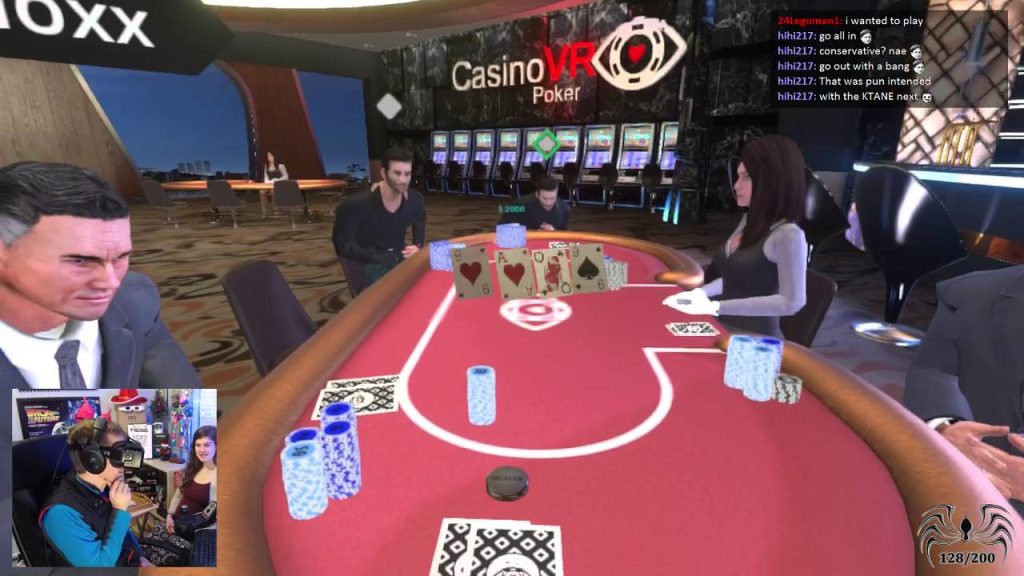
By donning a lightweight, wireless VR headset, a blackjack enthusiast can instantly step onto a fully realized, hyper-realistic digital casino floor. Players are represented by lifelike, highly customizable 3D avatars capable of moving naturally through virtual spaces.
Instead of clicking a mouse button, players physically sit down at a virtual table, pick up their digital chips using precise hand and finger tracking, and place their wagers directly onto the felt. The visual audio environments reproduce the authentic soundscapes of a premier resort, from the distant hum of slot machines to the physical snap of the cards leaving the shoe, providing an unprecedented level of spatial presence.
Seamless Mixed Reality Interfaces
For players who prefer not to be completely isolated from their immediate physical surroundings, Mixed Reality offers a compelling middle ground. Using advanced pass-through camera technology, MR software overlays digital interactive blackjack tables directly onto the user’s real-world environment.
A player can sit at their actual living room table while interacting with a digital, three-dimensional dealer and virtual opponents, seamlessly blending physical comfort with high-tech digital elements.
Live Casino Infrastructure and Massive Scalability Modules
Live dealer gaming remains the most popular format for digital blackjack players who value authentic human connection over software algorithms. The next generation of live studios relies on massive structural scaling to eliminate traditional operational bottlenecks.
Infinite Capacity Architecture
A historical flaw of both physical and digital blackjack tables is the physical limitation of seating. A standard table accommodates only seven spots; when a room is busy, players face frustrating wait times or are forced to use the passive Bet Behind feature.
To overcome this constraint, leading software developers have designed Infinite Blackjack variants. In this format, an unlimited number of concurrent players are dealt a common, shared initial two-card hand.
From that exact point forward, the advanced software segregates the decision pipeline. Every individual player retains absolute autonomy to play that hand precisely how they desire—choosing to hit, stand, double down, or split independently. The optical card scanning system and back-end logic process these thousands of concurrent decisions instantaneously, ensuring that no player ever faces a closed table or a delayed round.
Electrified RNG Hybrid Formats
To elevate the sensory excitement of standard card draws, operators are introducing highly successful hybrid formats that infuse live physical dealing with randomized multiplier engines. Variants like Lightning Blackjack introduce a dynamic fee structure that funds massive, RNG-calculated payout boosts ranging from 2x to 25x on winning hands. This intersection of real-world human dealing and hyper-volatile digital bonus mechanics appeals heavily to younger demographics who demand high-energy visual feedback loops alongside traditional skill-based gameplay.
The Technology Matrix Reshaping the Game
The seamless execution of modern digital blackjack relies on a sophisticated collection of synchronized hardware and software systems working in unison behind the scenes.
-
Optical Character Recognition Technology: High-speed 4K camera arrays continuously scan every millimeter of the physical dealing table, instantly converting the physical suits, values, and card movements into digital data to update the player interface in milliseconds.
-
Decentralized Provably Fair Ledgers: Integrating blockchain protocols allows platforms to record structural shuffle metrics and outcome logs onto immutable ledgers, providing players with verifiable proof that the random distribution of cards is unmanipulated.
-
Biometric Security and Haptic Feedback: High-tier virtual interfaces leverage built-in biometric verification to secure player account access instantly, while advanced haptic controllers deliver precise tactile vibrations that mirror the physical sensation of holding and peeling cards.
Frequently Asked Questions
Can the software-based AI advisors alter the actual mathematical house edge of blackjack?
No. An AI advisor or strategic overlay can help a player achieve the absolute optimal mathematical strategy by preventing human unforced errors, such as standing on a soft 17 against a dealer 10. By ensuring perfect execution of basic strategy, the player can minimize the house edge to its absolute baseline, typically around 0.5 percent depending on specific table rules. However, because the structural payouts and rules are fixed by the platform, software advice cannot push the mathematical edge into the player’s favor over the long term.
How do virtual reality tables prevent collusive behavior between multiple players?
Virtual reality blackjack environments deploy continuous monitoring algorithms designed to detect anomalous betting patterns and coordinated strategic choices. In public rooms, the system can utilize randomized seating modules that prevent friends from intentionally occupying adjacent seats to execute card-counting tracking or signal sharing. Furthermore, because player communication channels are routed through central audio servers, the platform can scan for prohibited collusive language or instantly mute private cross-talk during active hands.
What mechanism handles a situation where a live dealer accidentally misdeals a physical card?
When a human dealer misdeals a card—such as accidentally exposing a card meant to remain facedown or drawing an extra card out of sequence—the Optical Character Recognition software immediately flags the structural anomaly and halts the game loop. The active table manager or pit boss is called to the camera view to execute a formal manual review. Depending on the exact regulatory rules of that specific jurisdiction, the hand will either be corrected via a standardized burn card protocol or declared completely void, returning all initial wagers safely to the active players.
Will the implementation of VR headsets cause motion sickness during extended blackjack sessions?
Motion sickness in virtual reality, commonly referred to as simulation sickness, is primarily triggered by high-velocity virtual movement that conflicts with the physical body’s stationary state, such as in racing simulators or first-person shooters. Because virtual blackjack is an inherently static table game where your avatar remains comfortably seated in a fixed spatial location, the risk of experiencing motion sickness is exceptionally low, making it an ideal format for extended, comfortable digital entertainment sessions.
Are hybrid multiplier games like Lightning Blackjack suitable for traditional card counters?
No, hybrid multiplier variations are heavily designed to defeat traditional card counting methods. These games typically utilize an integrated automated card shoe that continuously shuffles the eight decks after every single round, completely eliminating the concept of card penetration and rendering the running count perpetually at zero. Furthermore, the mandatory fee required to fund the randomized multiplier pools alters the standard payout math, making these variants excellent for high-volatility entertainment but highly inefficient for classic card-counting systems.
Can I access future VR casino environments using standard mobile device displays?
While the most immersive, three-dimensional spatial experience requires a dedicated Virtual Reality headset, progressive developers are utilizing cross-platform compatibility frameworks. These systems allow players to log into the identical metaverse casino servers using a standard smartphone or tablet screen. The display switches to a responsive touch-controlled 3D viewport, ensuring you can still sit at the same virtual tables and interact with VR avatar players without owning specialized wearable hardware.